SENSORS
Fiber Bragg Gratings
Embedded or surface mounted. No compromises.
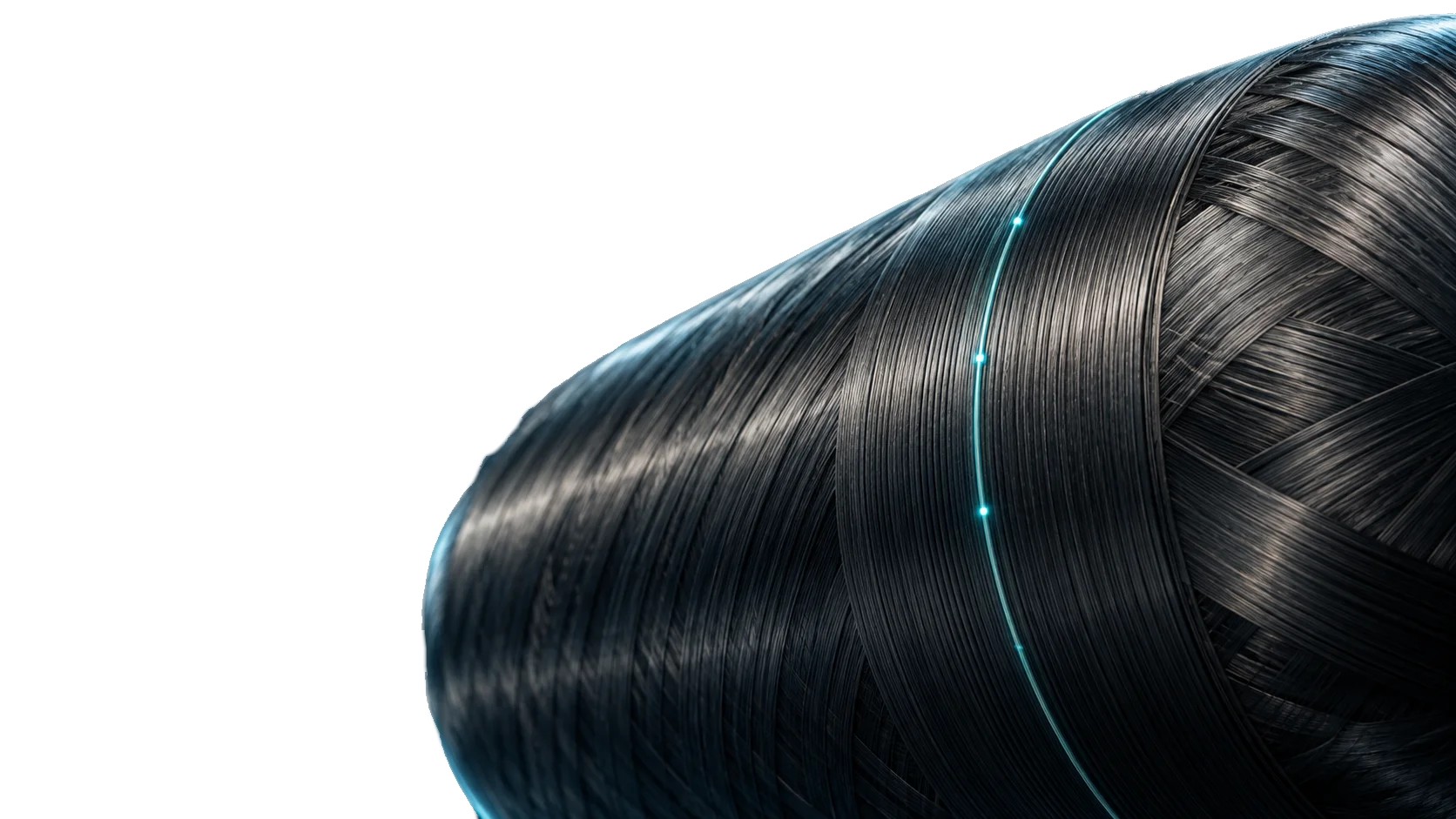
Over 10 years of embedding fiber optic sensors in filament winding, AFP/ATL, prepreg, pultrusion and infusion, in thermosets and thermoplastics. We design the sensor layout around your process and what you need to measure.
Our sensors
One for new composite parts, one for parts already in service, one for steel and concrete.
CS CoWind
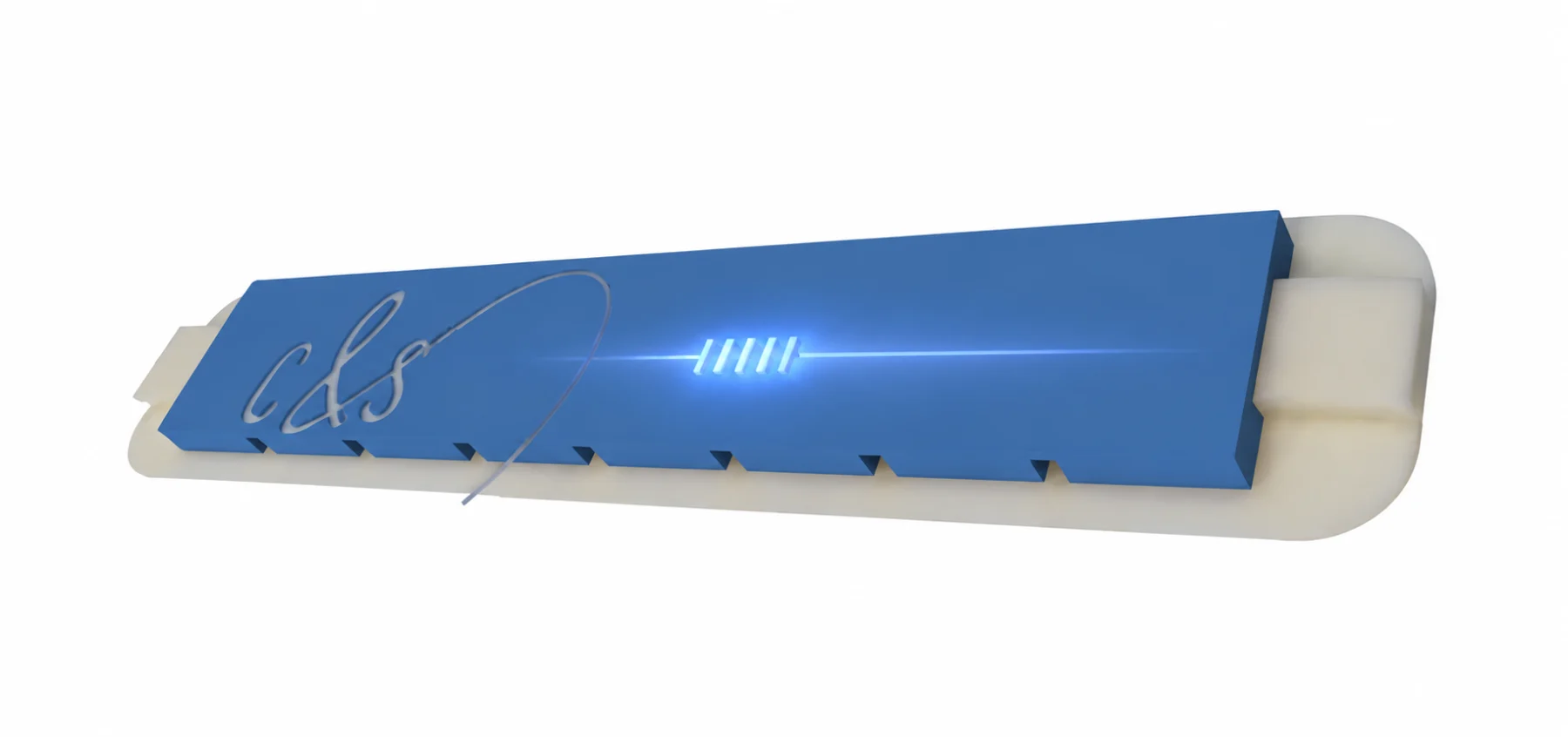
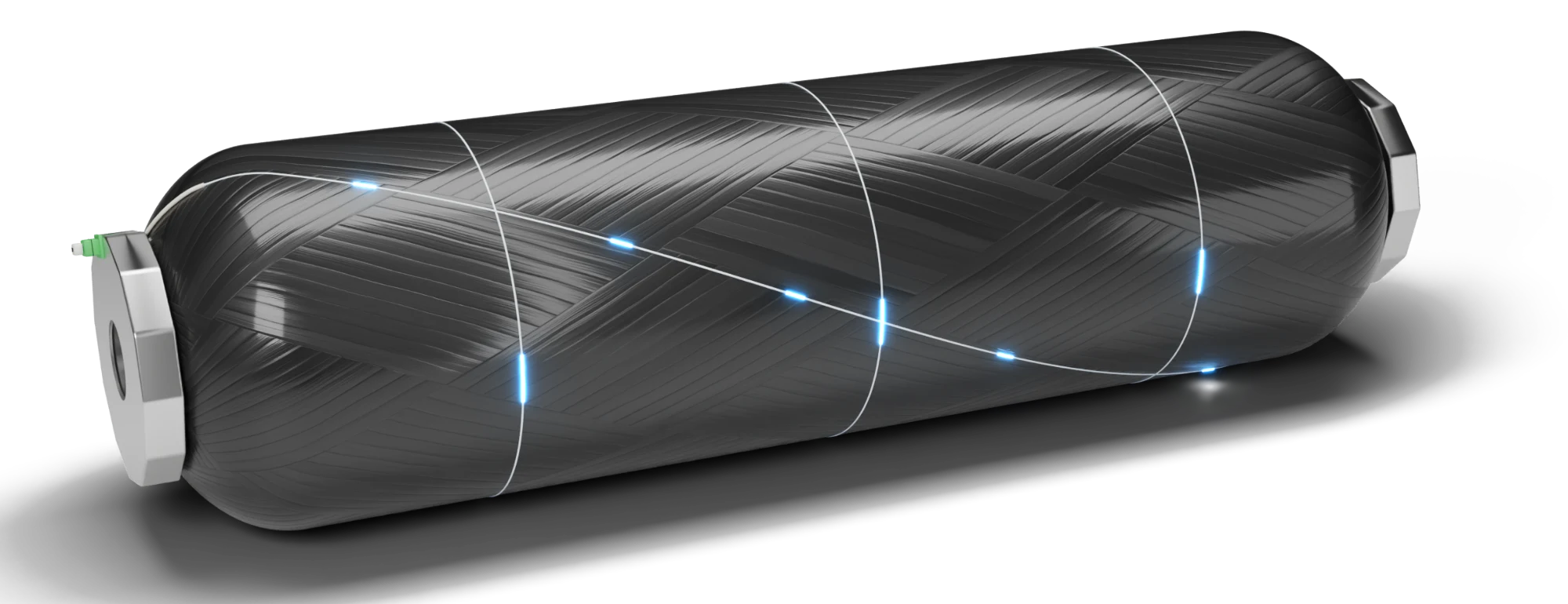
Embed. Sensors laid into the laminate during production. They see what happens inside the part, from the first ply to the end of its life.
EMBED
Sensors wound into the laminate.
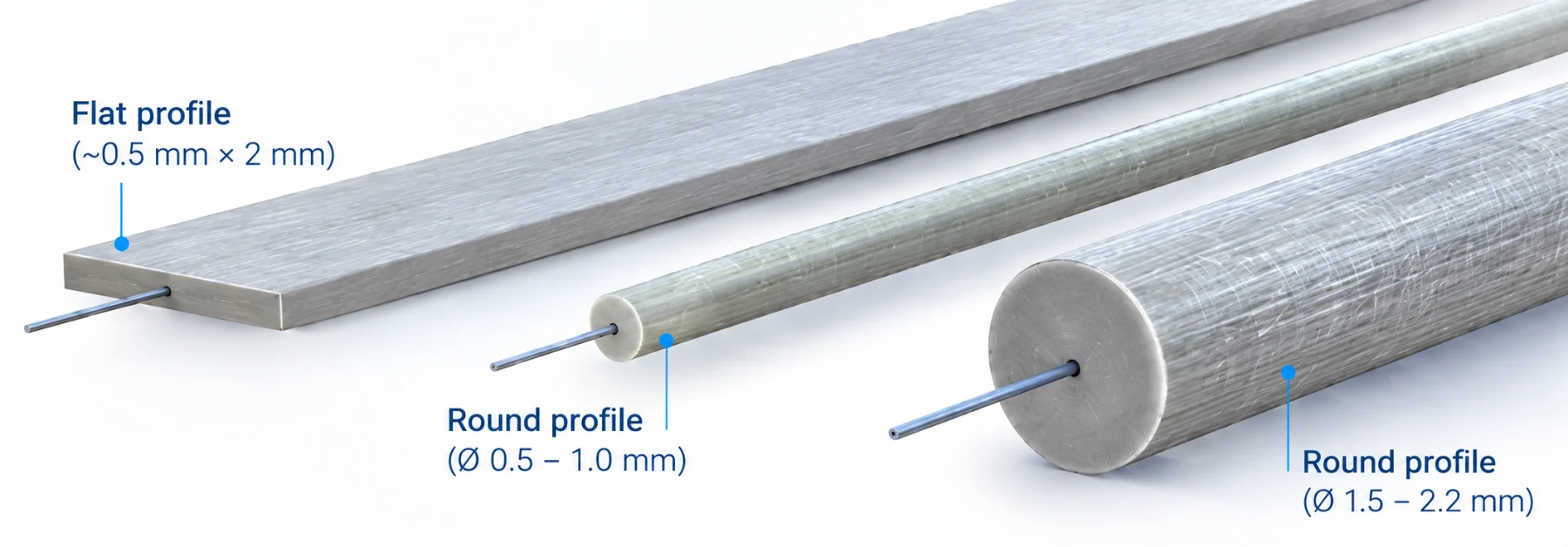
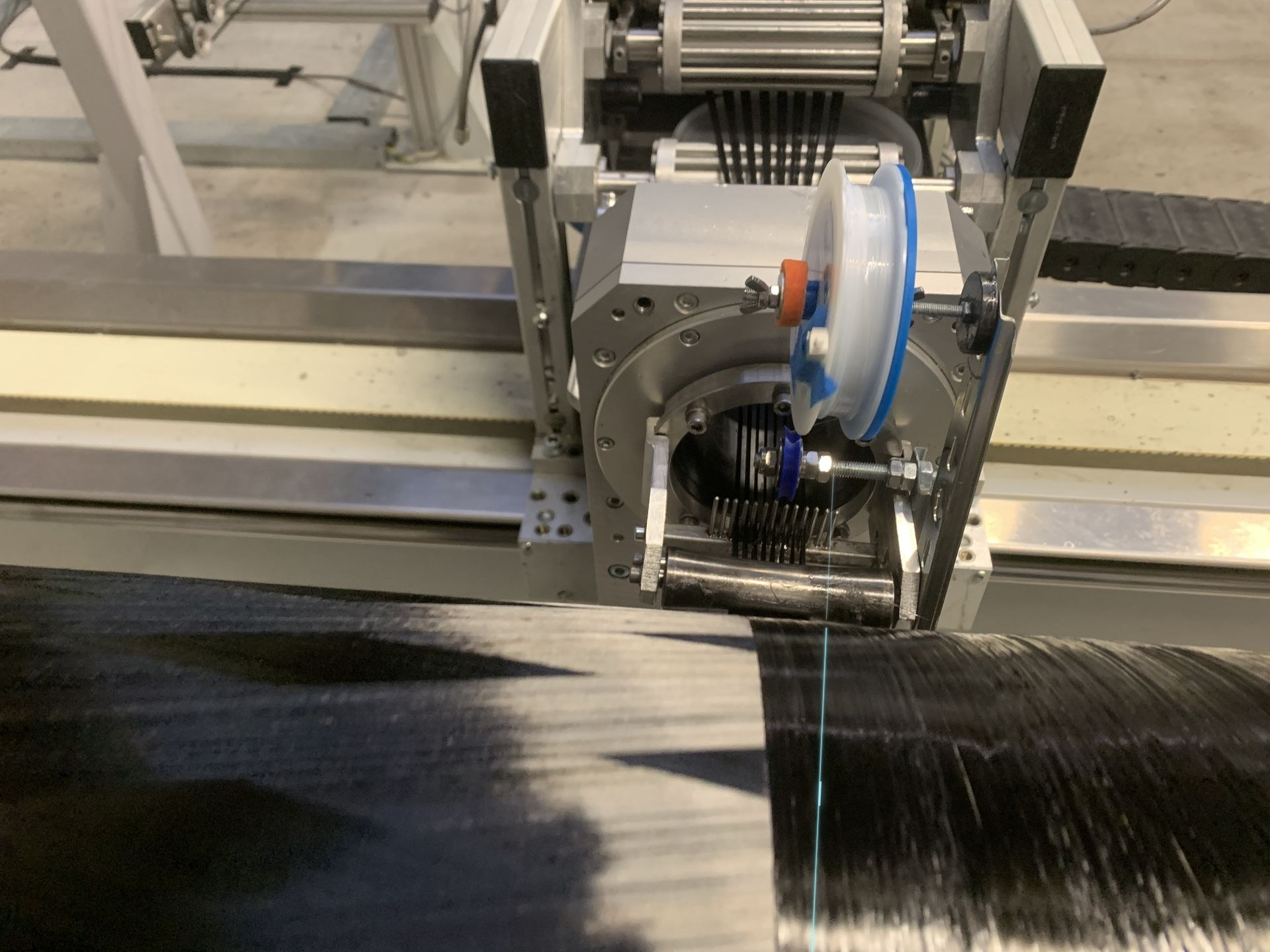
A plug-and-play FBG co-winding assembly. It mounts on the winding head with the CS CoWind kit and lays the sensors into the laminate without changing your cycle. Ideal for Type IV COPVs and other wound structures.
Not only filament winding: CS CoWind can also be mounted on an AFP robot head, to lay the sensors in line during automated fiber placement.
In stock, ready to ship: 7 Circular (hoop) and 2 Helical references.
See all configurations.
| Reference | FBG spacing | Fiber lead-in | Centre wavelengths |
|---|---|---|---|
| CIR#1_s | 0.2 m | 4 m | 1515 / 1522.5 / 1530 nm |
| CIR#1_L | 0.2 m | 8 m | 1537.5 / 1545 / 1552.5 nm |
| CIR#2_s | 0.3 m | 4 m | 1515 / 1522.5 / 1530 nm |
| CIR#2_L | 0.3 m | 8 m | 1537.5 / 1545 / 1552.5 nm |
| CIR#3_s | 0.5 m | 4 m | 1515 / 1522.5 / 1530 nm |
| CIR#3_L | 0.5 m | 8 m | 1537.5 / 1545 / 1552.5 nm |
| CIR#4 | 0.75 m | 8 m | 1537.5 / 1545 / 1552.5 nm |
| HEL#1 helical | 0.5 m | 1515 / 1522.5 / 1530 nm | |
| HEL#2 helical | 0.5 m | 1537.5 / 1545 / 1552.5 nm |
Helical, for low and high angle windings: HEL#1 and HEL#2 use different wavelength sets, so two helical lines can run on one fiber network without wavelength clash.
Every line: 3 FBGs of 3 mm, ORMOCER® coated fiber (Ø 195 µm), > 5% strain at breakage, −180 °C to +200 °C (fiber), LC/APC connector, Ø ~80 mm spool. Other spacings, lead-ins or wavelengths on request.
BUILT TO YOUR SPEC
Or configured for your part.
When the stock references do not fit: hoop, helical or both. You tell us what to measure, we deliver a production-ready array.
Number of FBGs, spacing, wavelengths, free fiber and lead lengths, connectors: every parameter is set for your vessel and your winding program, and delivered on a spool that mounts on your winding head.
CS Patch
Mount. When embedding is not an option, we bond the sensors onto new or existing structures, without compromising performance or safety.
CS PATCH IN ACTION
Retrofit a structure in minutes.
No drilling, no change to the vessel, no epoxy cure time.
Position. The 3D-printed jig sets the FBG location and angle.
Bond. UV light cures the CS UVACR adhesive in seconds. No epoxy, no oven, no waiting.
Connect. Plug in the LC/APC pigtail and the vessel starts reporting.
Only passive fiber goes into the ATEX zone. The interrogator stays outside.
Single (1 FBG), Dual 0°/90°, or Dual Free with independent orientation and spacing.
Installation manual and step-by-step sequence
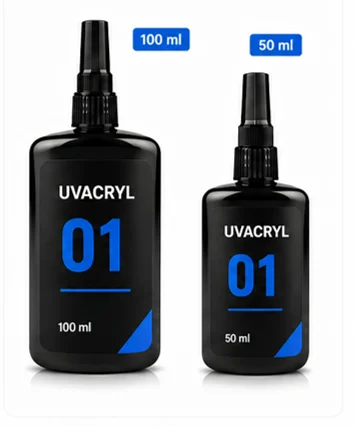
One system: jig, sensor and adhesive
CS UVACR01, 02 and 03 are part of CS Patch: three UV-curing grades designed to work with the jig and the sensor, delivered with a step-by-step installation manual.
CS FSR
Fiber Sensing Rod
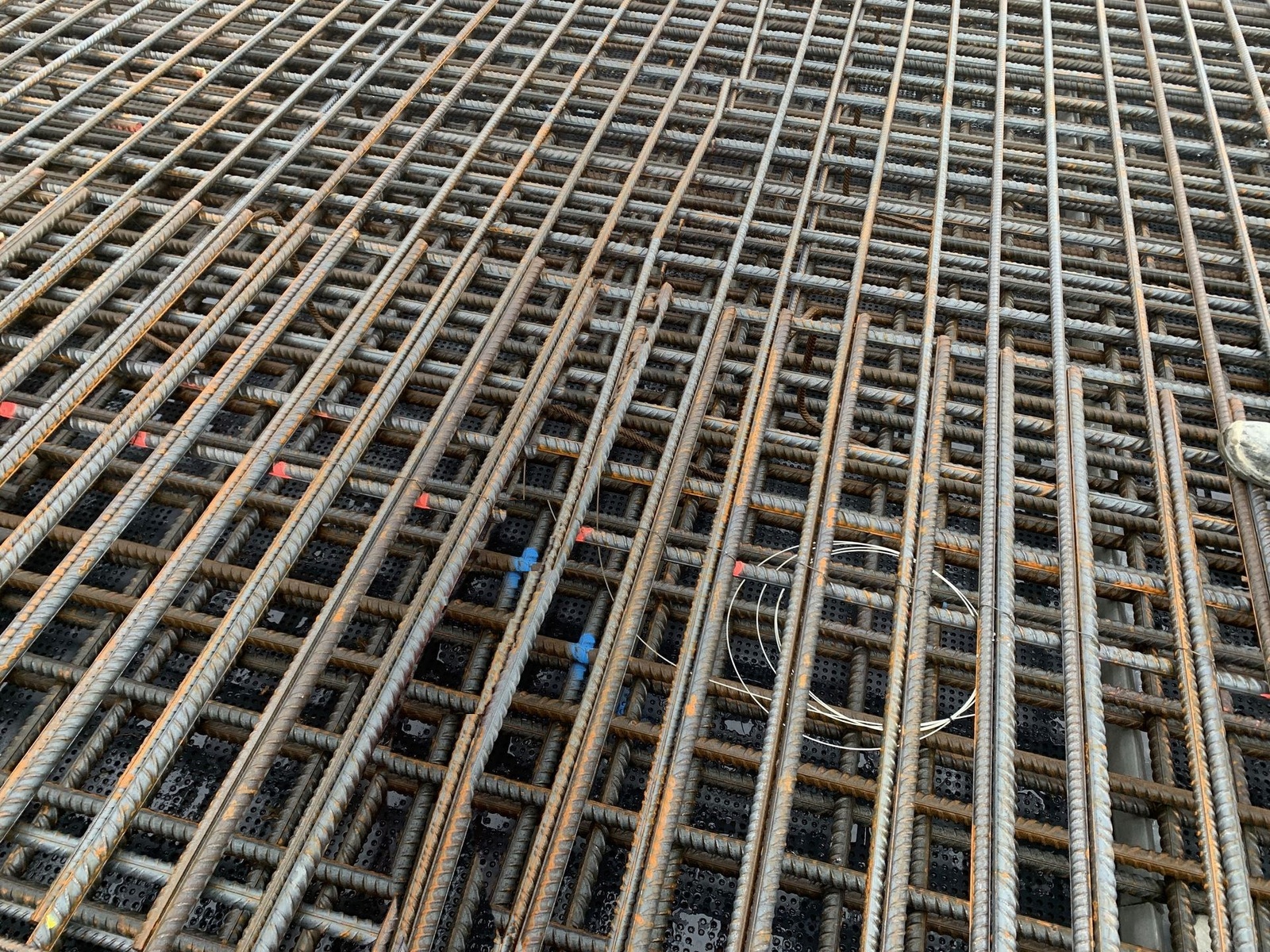
Steel and concrete. Not only composites: CS FSR brings fiber optic sensing to steel and concrete structures.
STEEL AND CONCRETE
Fiber sensing rod, built for the field.
A composite-reinforced sensing rod that measures strain on steel, concrete or composite, on flat and curved surfaces. Mounted on existing structures or cast into new concrete, and proven in very harsh environments.
It runs on offshore monopiles, steel beams and bridges, installed and commissioned by our own field engineers.
EDGE CONNECTION
Smart composite parts in series, connected after machining
Build the part with your current process. Embed the fiber and forget it, machine the part, then a robot head connects the fiber at the end of the line. Better than a splice: Edge writes a new core between the two fibers.
Edge is patented in Europe and the US. Surface Connection, which reaches the fiber from the surface of the part, is in development.
PARTNERS WANTED
Ready to make smart composite parts the standard? Let's do it together.
We are looking for composite manufacturers or OEMs to co-develop Edge Connection with us.
Connecting embedded sensors
An embedded sensor is only as good as its connection. Ours survive handling, testing, machining and service.
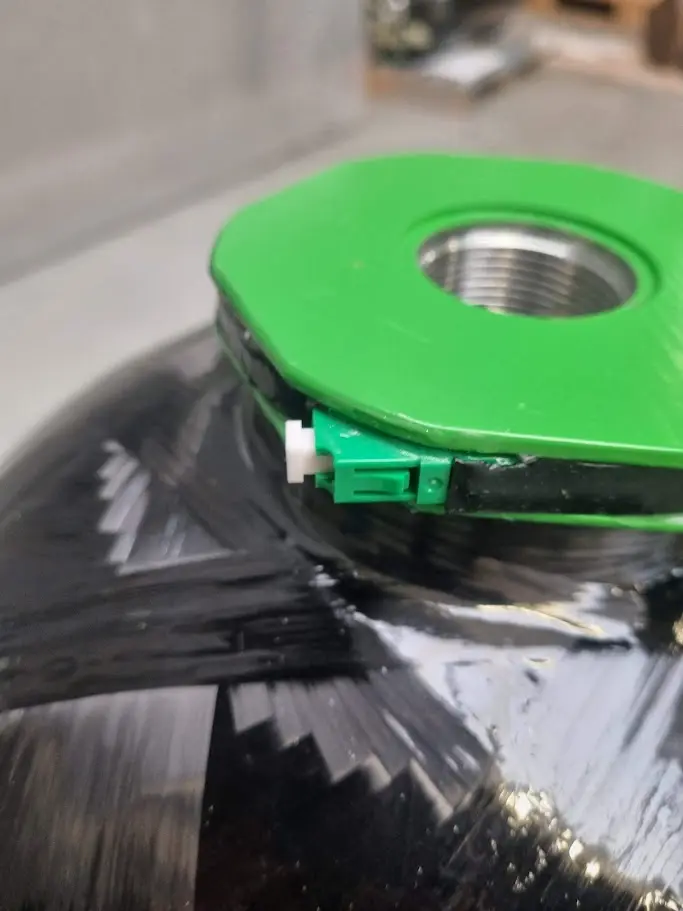
COPV boss connector
The fiber optic connector is integrated into the boss. Robust, protected and repeatable, for long-term monitoring.

CS Click
A surface-mounted connector for test setups and semi-permanent installations. Fast, safe, on flat or curved surfaces.
Not sure which sensor fits your part? Tell us what you need to measure.